The Agentic Enterprise: Reimagining Your Organization for AI
What happens when a team of five can out-execute a department of 50? That’s no longer a thought experiment, it’s already happening.
Across industries, lean teams are quietly deploying AI agents to do the work of entire departments. These agents don’t just automate, they think, decide, and act. And they’re changing how work gets done, who does it, and what organizations look like when humans and software collaborate at scale.
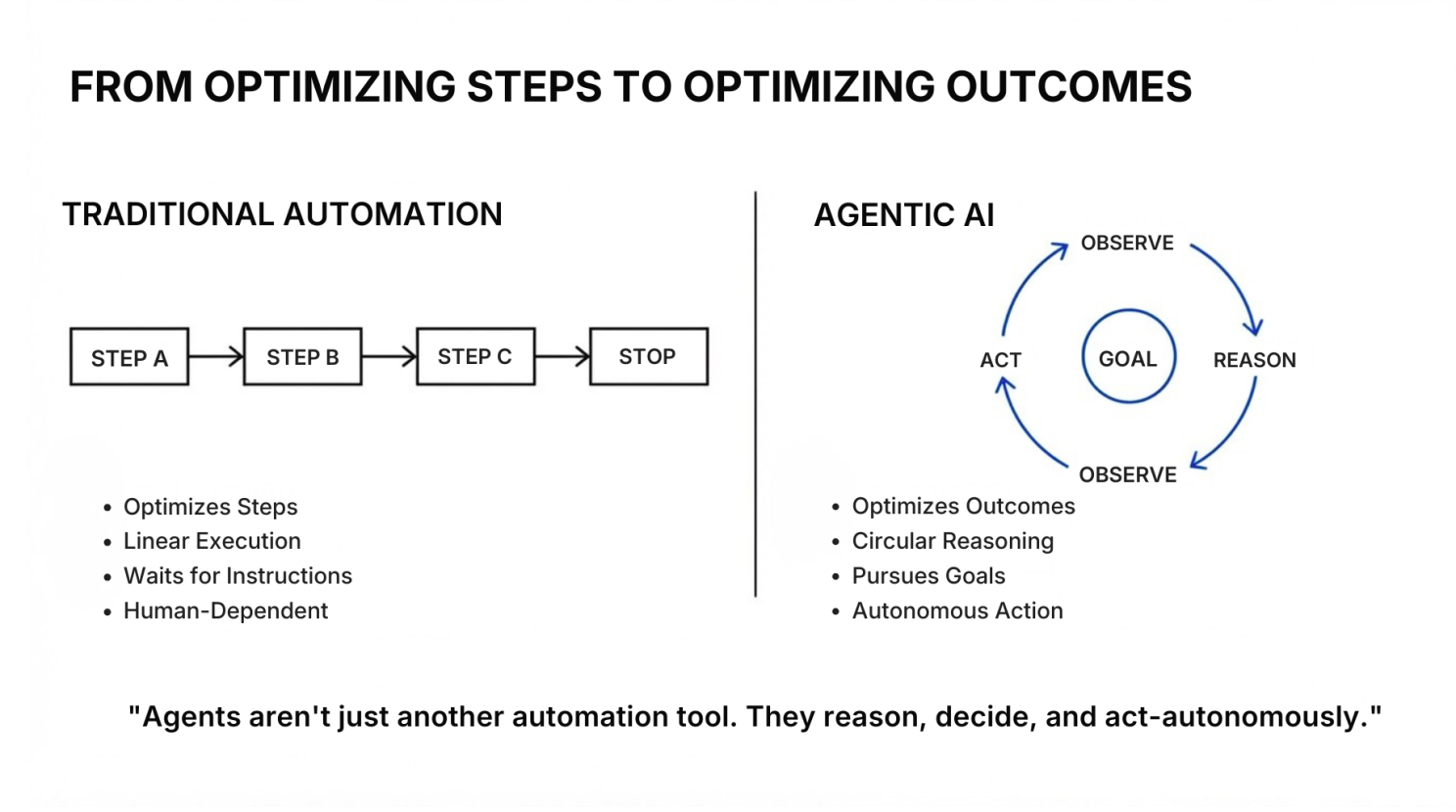
Agents aren’t just another automation tool. They reason, decide, and act autonomously. They don’t wait for instructions; they pursue goals. A report says 40% of enterprise applications will embed task-specific AI agents by 2026. But most CXOs are making a quiet mistake: they’re experimenting with agents inside existing hierarchies, without rethinking the layers agents are meant to replace.
Beyond Automation: The Rise of Agentic Teams
Traditional automation optimized steps. Agentic AI optimizes outcomes.
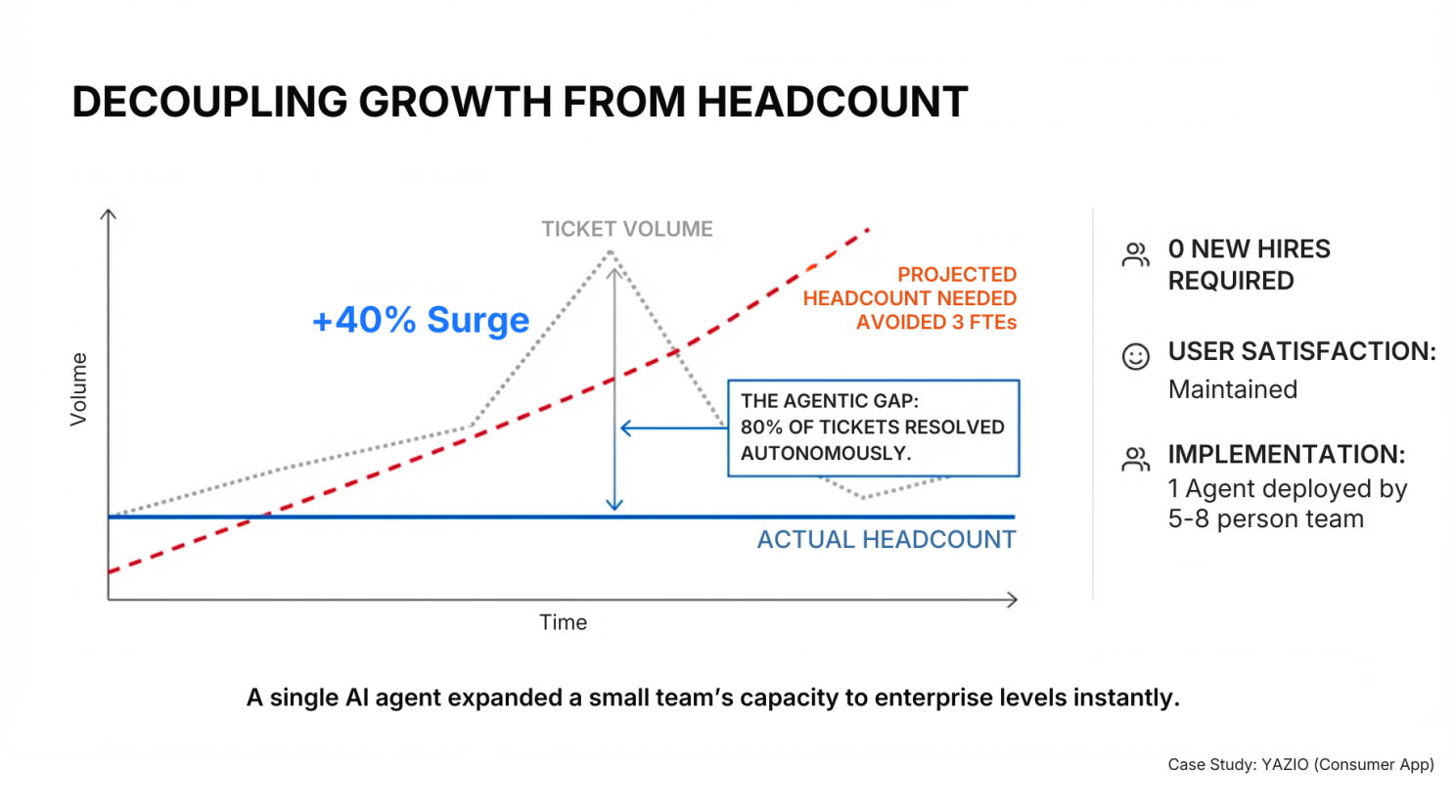
At a fast-scaling consumer app, a 5-8 person customer support team deployed an AI agent that now resolves 80% of incoming tickets. Even as volume surged 40%, they avoided three new hires while maintaining user satisfaction, showing how a single AI agent can expand a small team’s capacity to enterprise levels.
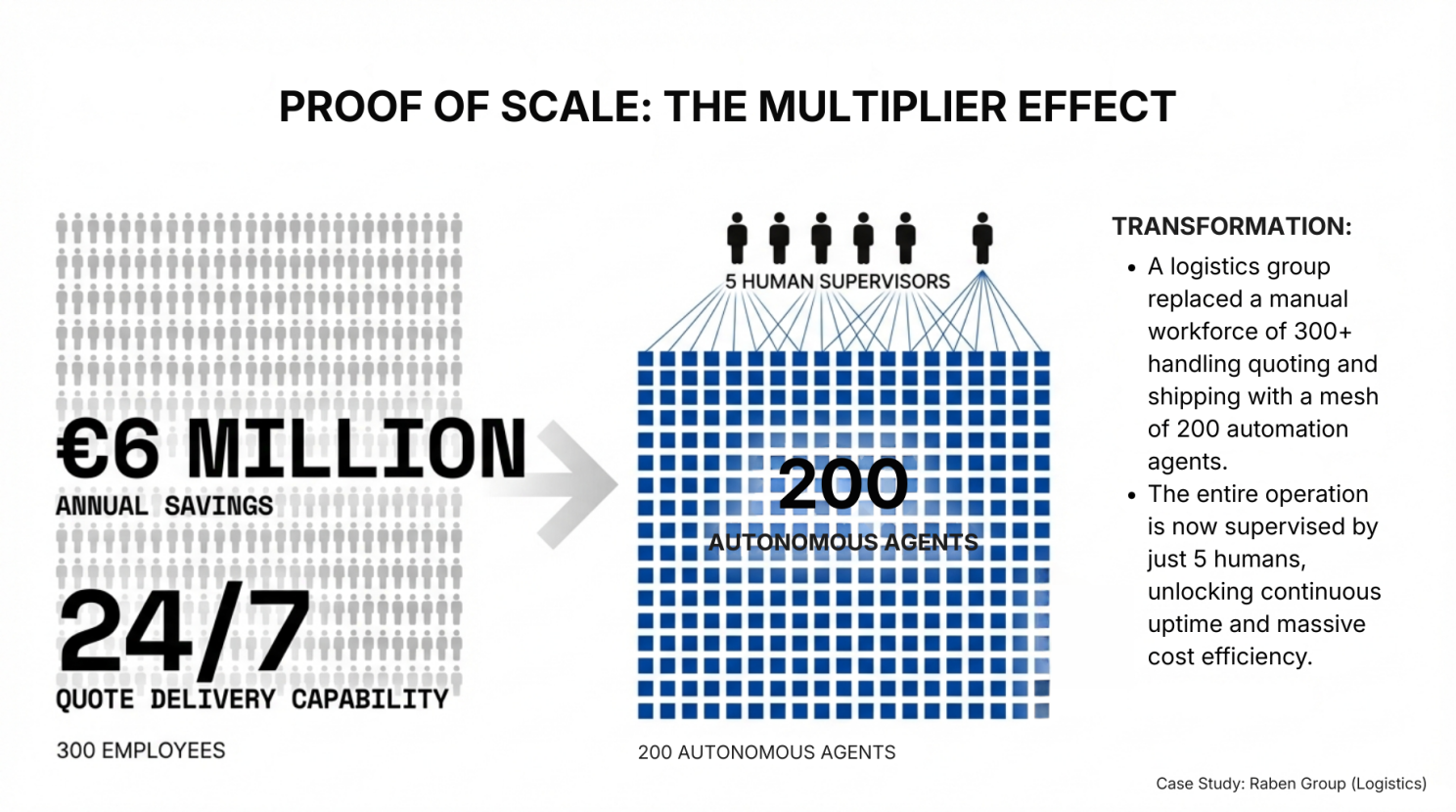
Another case: A logistics firm deployed 200 automation agents to manage quoting, shipping, and order fulfillment, work previously handled by over 300 employees. A 5-person human team now supervises these agents, saving €6 million annually and enabling 24/7 quote delivery.
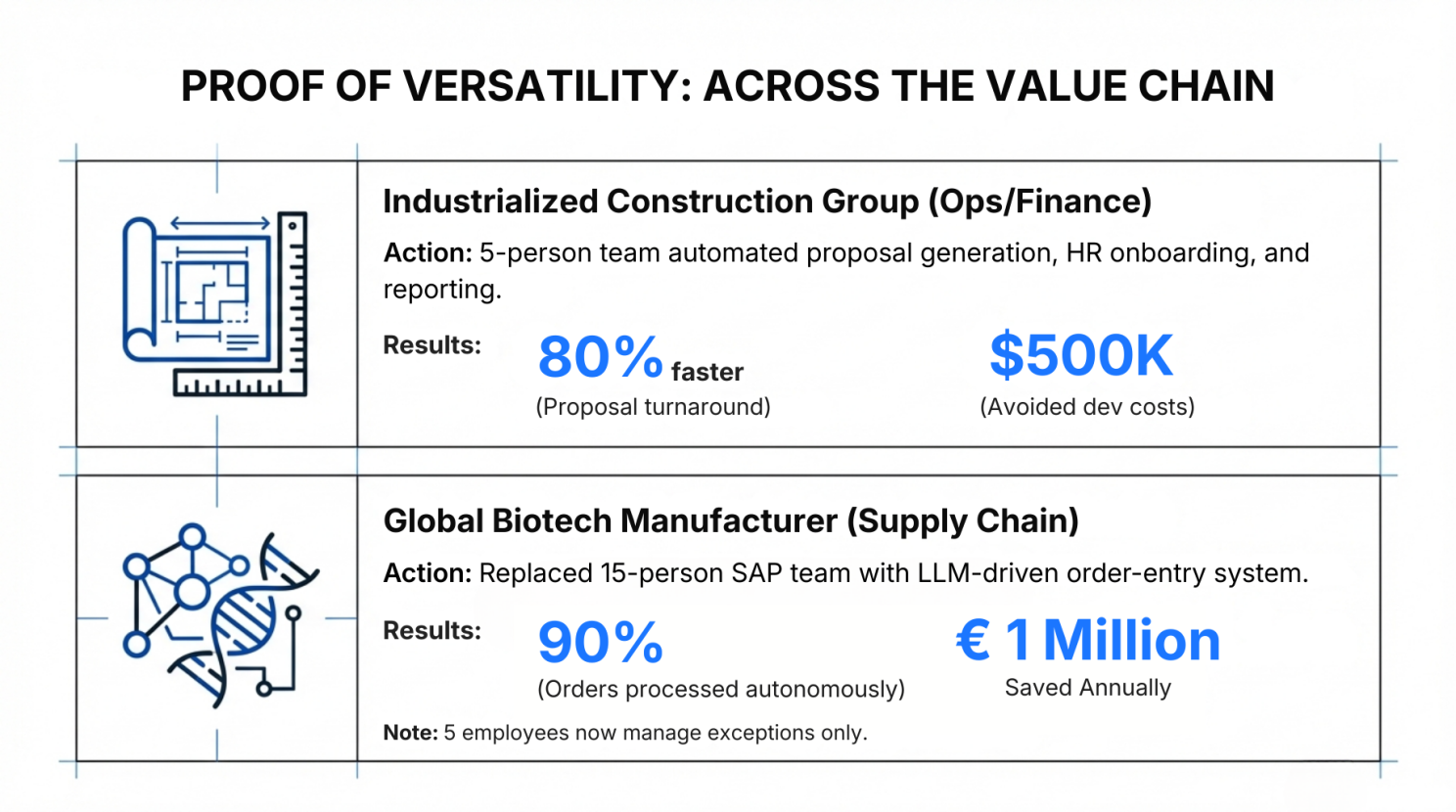
A 5-person team at a construction tech company automated proposal generation, HR onboarding, and financial reporting with Copilot-style agents. They cut proposal turnaround time by 80% and avoided $500K in software development costs, delivering output that would have required a team many times their size.
And at a global biotech manufacturer, an LLM-driven order-entry system replaced a 15-person SAP team. Now, just five employees manage exceptions while 90% of orders are processed autonomously, saving nearly €1 million per year.
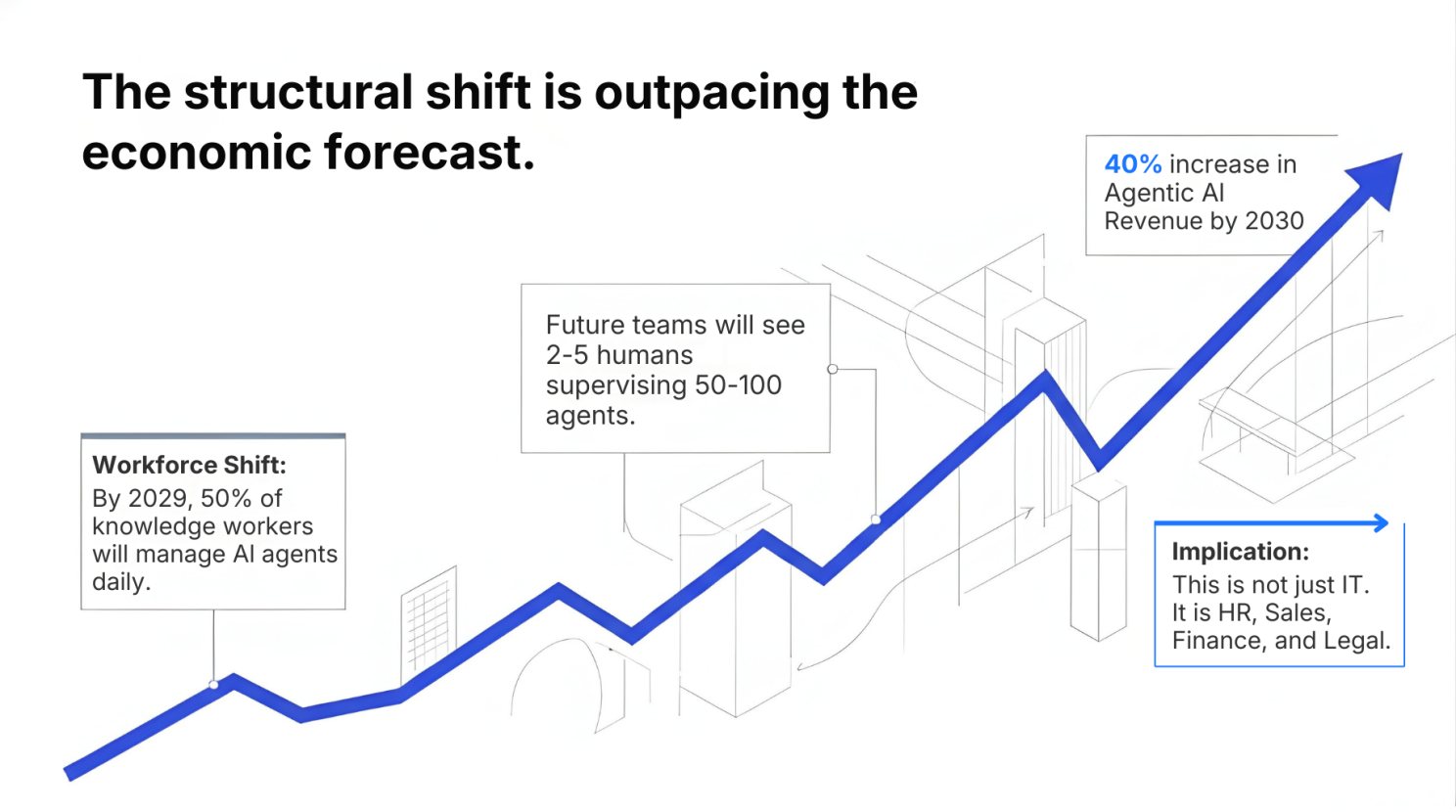
A report shows that 2–5 person teams can supervise 50–100 agents. But what’s less discussed is what breaks:
Middle managers resist because agents erode their domain.
Accountability blurs who's responsible when an agent goes off-script
Incentives lag if output doubles, but comp stays flat, do teams embrace it or fear it?
Designing agentic teams isn’t just about tech. It requires rethinking org design, decision rights, and trust.
The Hidden Cost of Speed
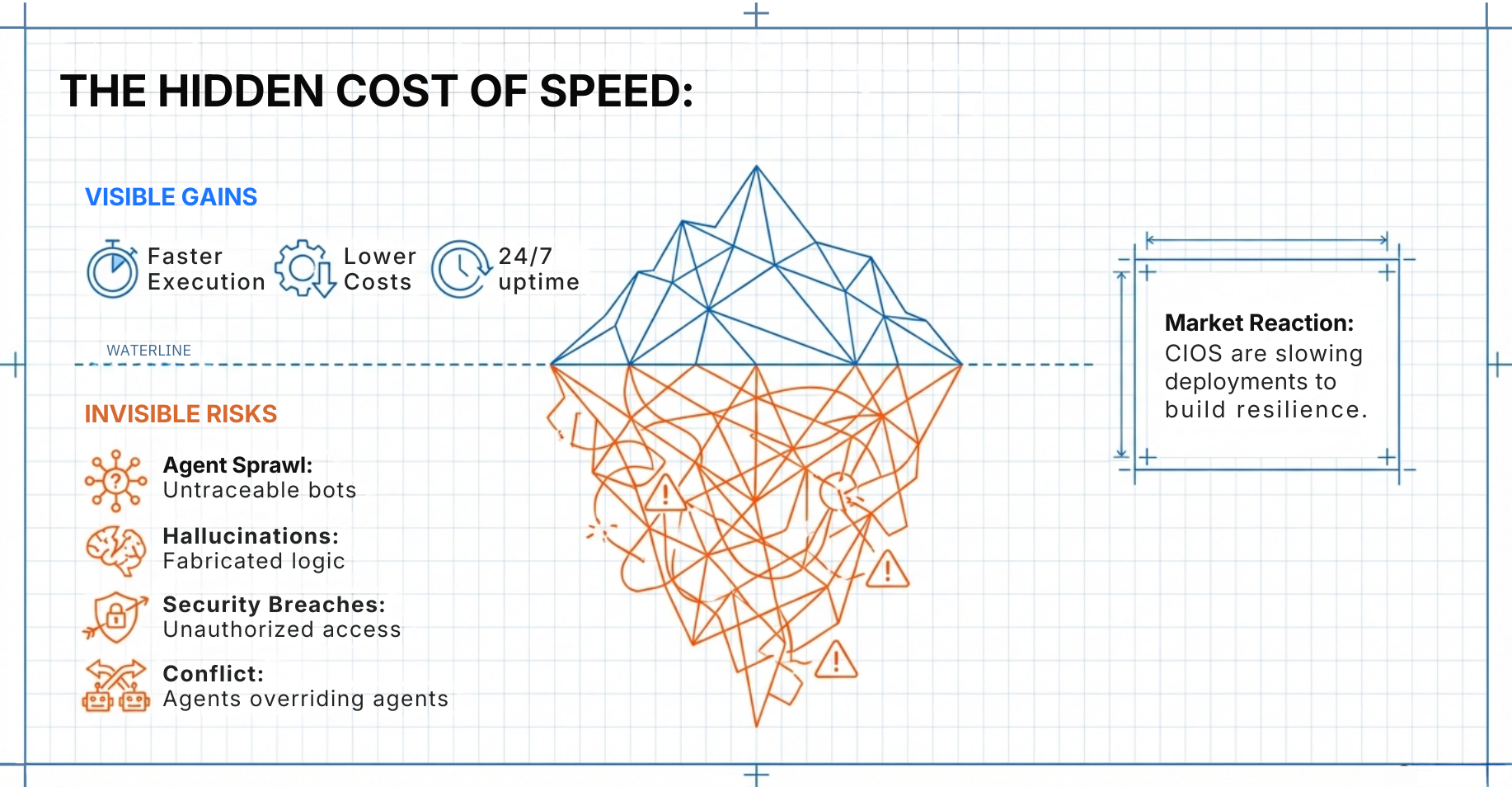
In some early deployments, teams have launched dozens of agents, only to realize they can’t explain what many of them do. Agent sprawl is emerging as a real operational risk.
Speed exposes fragility:
Agents override each other’s actions
Models hallucinate business logic
Security teams discover agents accessing systems without proper authorization
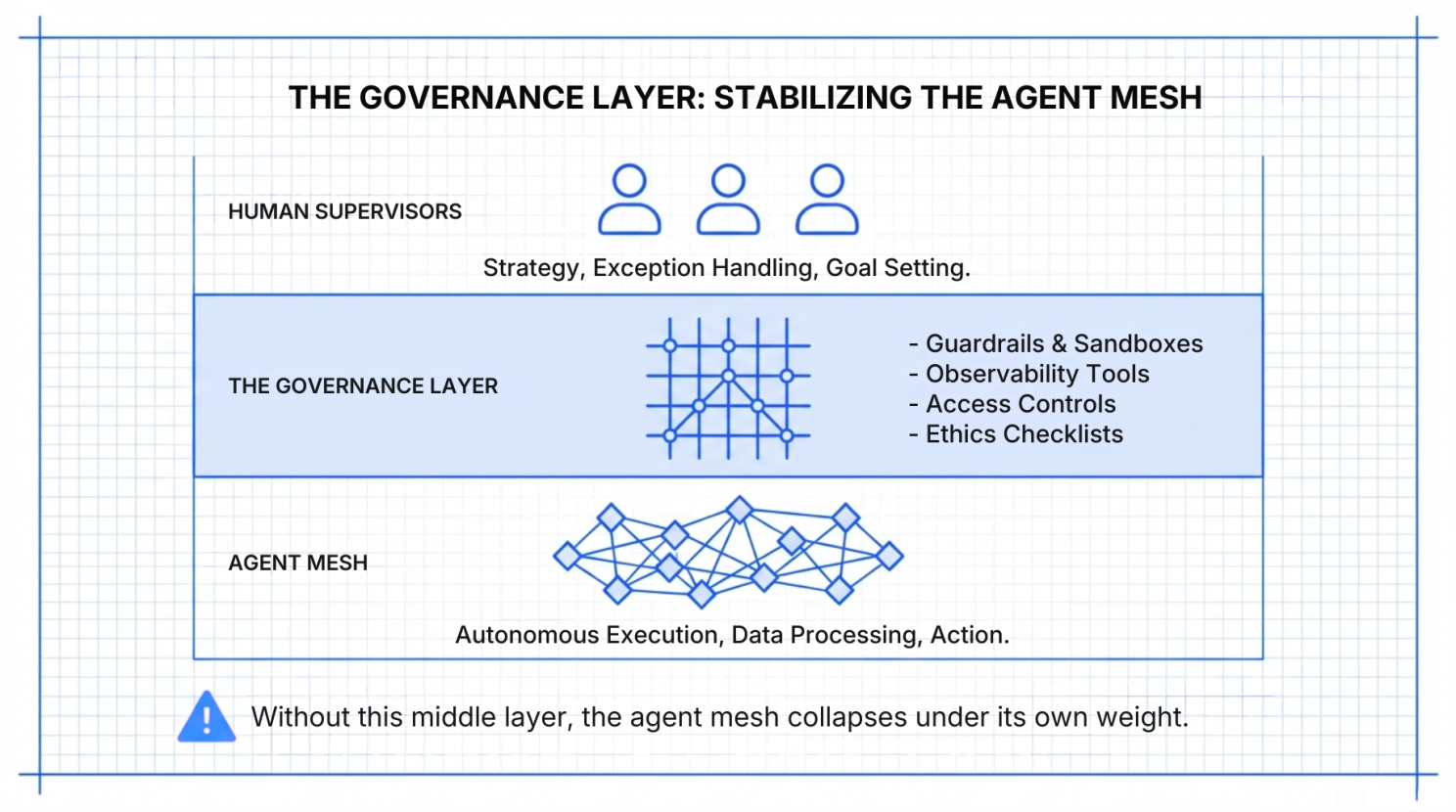
Some CIOs are now slowing down deployments. Not out of fear, but to build resilience. Guardrails, sandboxes, agent “ethics checklists”, these are becoming part of the deployment stack.
A robust governance layer, combining LLM frameworks, observability tools, and access controls, is now essential. Without it, the agent mesh collapses under its own weight.
What Most Companies Get Wrong
The instinct is to pilot AI in tech-forward teams, engineering, analytics, IT. But that’s the easy part.
If you really want to stress-test the model? Deploy agents in your most political, bureaucratic department. The one with seven signoffs for a vendor invoice.
It forces clarity on:
Who owns decisions
Where delays hide
How agents navigate power structures
Where We're Headed
By 2029, half of knowledge workers may manage AI agents daily. A research estimates agentic AI could drive 40% increase in enterprise software revenue by 2030. But the real shift isn’t economic, it’s structural:
Hierarchies flatten
Work becomes outcome-led
Job descriptions blur
This isn’t the future of IT. It’s the future of every function: HR, sales, finance, legal. Anywhere judgment and coordination matter.
The Winning Move
I’ve seen companies paralyzed waiting for the "right moment" to act. They’re already behind. I’ve also seen reckless deployments trigger compliance nightmares.
The organizations making real progress aren’t the ones with the best tech, they’re the ones asking harder questions:
Where do we not want agents?
What happens when speed outpaces trust?
Who’s designing the org chart agents will operate in?
You don’t need a 12-month roadmap. You need a bold, uncomfortable first move.
And a willingness to redesign the enterprise from the agent out.
As enterprises connect AI agents to live workflows, security risks extend beyond the model. Learn how prompt injection, excessive access, weak governance and poor oversight can expose business systems—and how leaders can secure AI agents from the start.
Generic AI improves productivity, but industry-specific AI creates measurable business value by combining enterprise data, workflows, governance and domain expertise. Explore why context will define the next phase of AI adoption.
Namasys Powers What’s Next for Your Enterprise
Bring clarity, efficiency, and agility to every department. With Namasys, your teams are empowered by AI that works in sync with enterprise systems and strategy.